

A Roadmap for Canada’s Grid Technology Supply Chains

Canada’s electricity system is entering a period of growth and transformation. Meeting rising electricity demand, supporting industrial growth, and achieving net-zero will require significant investment in the electricity grid, and the critical technologies and supply chains needed to expand, modernize and operate the grid.
For Electro-Federation Canada (EFC), Dunsky developed a national technology and policy roadmap to identify the grid technologies most critical to Canada’s electricity transition, assess the barriers limiting their deployment, and recommend actions to strengthen domestic supply chains and accelerate investment.
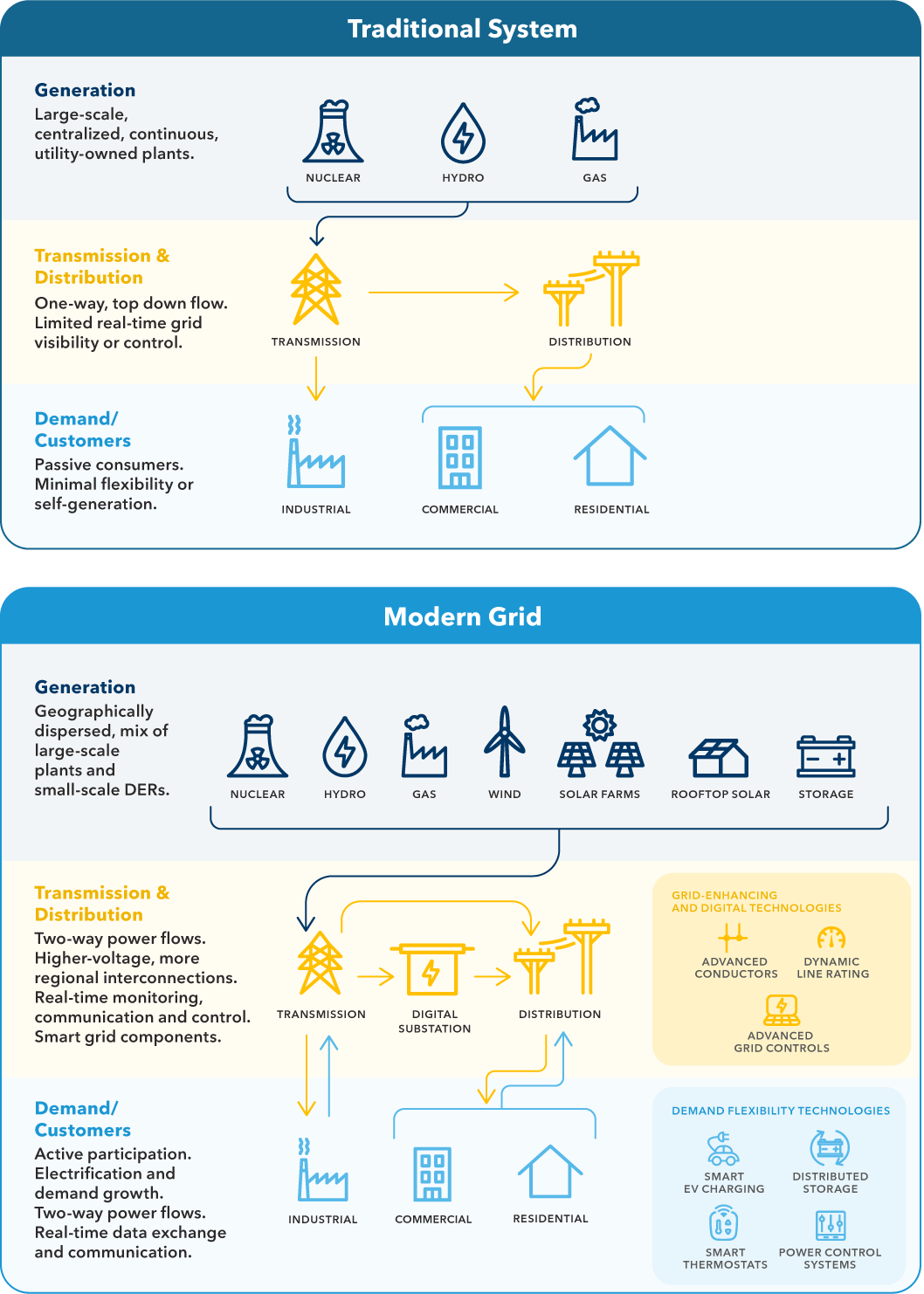
Figure 1
The Evolving Electricity Sector.
The study evaluated nine priority grid technologies across three categories (see below). Drawing on market research, interviews with utilities and industry experts, and a survey of EFC members, we assessed each technology against three dimensions: strategic opportunity, market and technology readiness, and deployment barriers.
We found that while all nine technologies will play a key role in Canada’s energy transition, each faces a different set of barriers – ranging from global supply chain disruptions (notably for critical grid equipment like power transformers and high-voltage switchgear) to outdated regulatory frameworks, fragmented codes and standards, and limited interoperability.
If left unaddressed these barriers will continue to slow grid expansion and limit the deployment of smart grid and flexibility solutions.
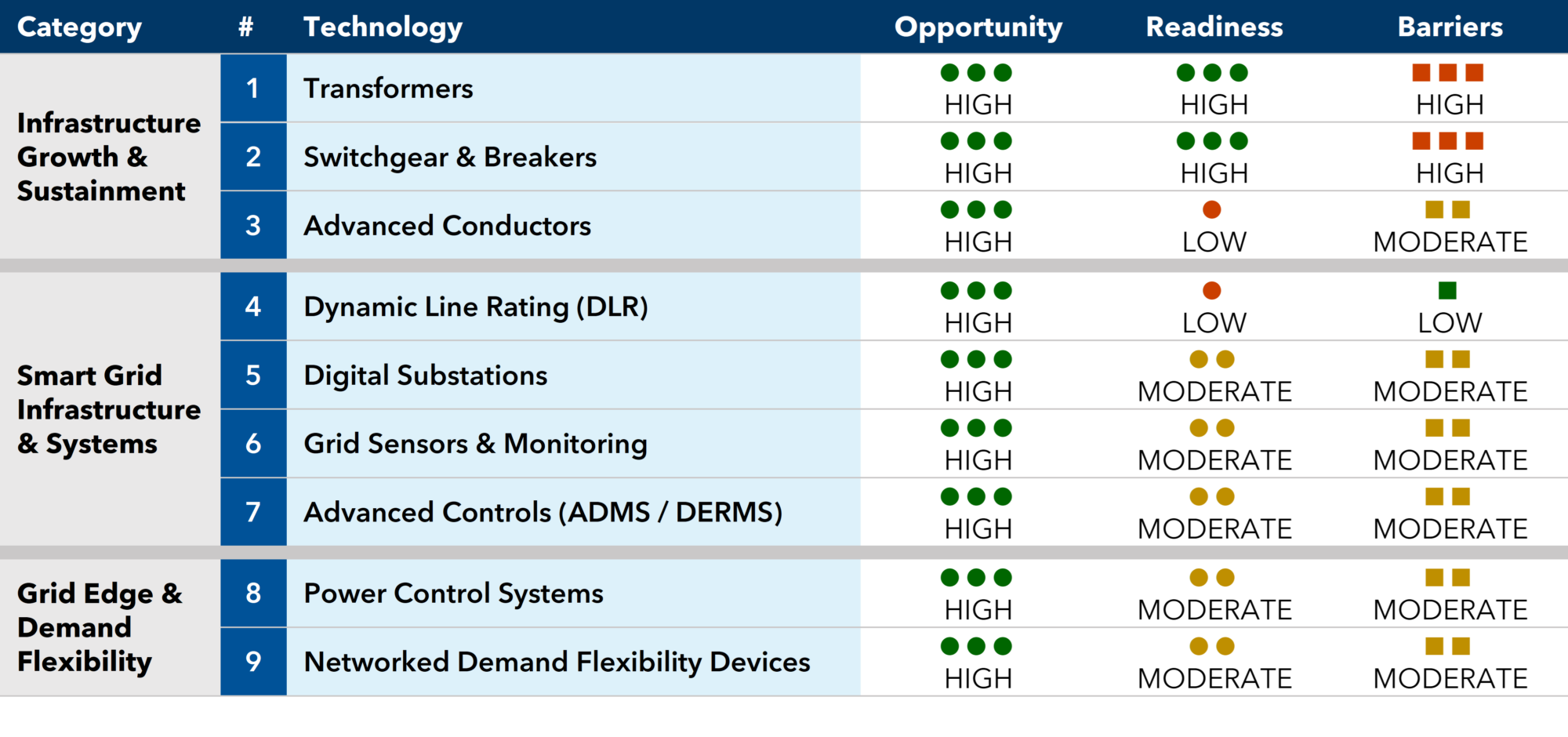
Figure 2
Summary of technology opportunity assessments.
The report recommends five strategic priorities for federal and provincial government, regulators, utilities and industry:
- Scale and secure domestic manufacturing and supply chains for critical grid equipment and components, using demand aggregation, strategic financing, and targeted incentives.
- Modernize utility regulatory frameworks to enable cost recovery for digital systems, non-wires alternatives, and demand flexibility.
- Align grid technology codes and standards to improve interoperability, reduce vendor lock-in, and accelerate deployment.
- Demonstrate and scale emerging grid solutions under Canadian operating conditions to reduce risk and support replication and scaling.
- Provide long-term policy certainty to accelerate grid build-out through streamlined approvals and federal support for priority transmission and grid modernization projects.
Read the report to learn more, including access to fact sheets covering the nine grid technologies mentioned in this article.
Related Projects
- Read more about Pathways to Regional Electricity Integration in Atlantic Canada
Pathways to Regional Electricity Integration in Atlantic Canada
June 19, 2026
We are excited to share a new research report developed by Dunsky titled Pathways to Regional Electricity Integration for Atlantic…

- Read more about Dunsky in Nova Scotia
Dunsky in Nova Scotia
February 26, 2026
Nova Scotia has long been a Canadian leader in the energy transition. It was notably the first to create a…

- Read more about Unlocking Vehicle-Grid Integration in Canada
Unlocking Vehicle-Grid Integration in Canada
September 25, 2025
A new report from Dunsky prepared for CSA Group provides a comprehensive look at the Vehicle-Grid Integration (VGI) landscape in…