

Unlocking Vehicle-Grid Integration in Canada
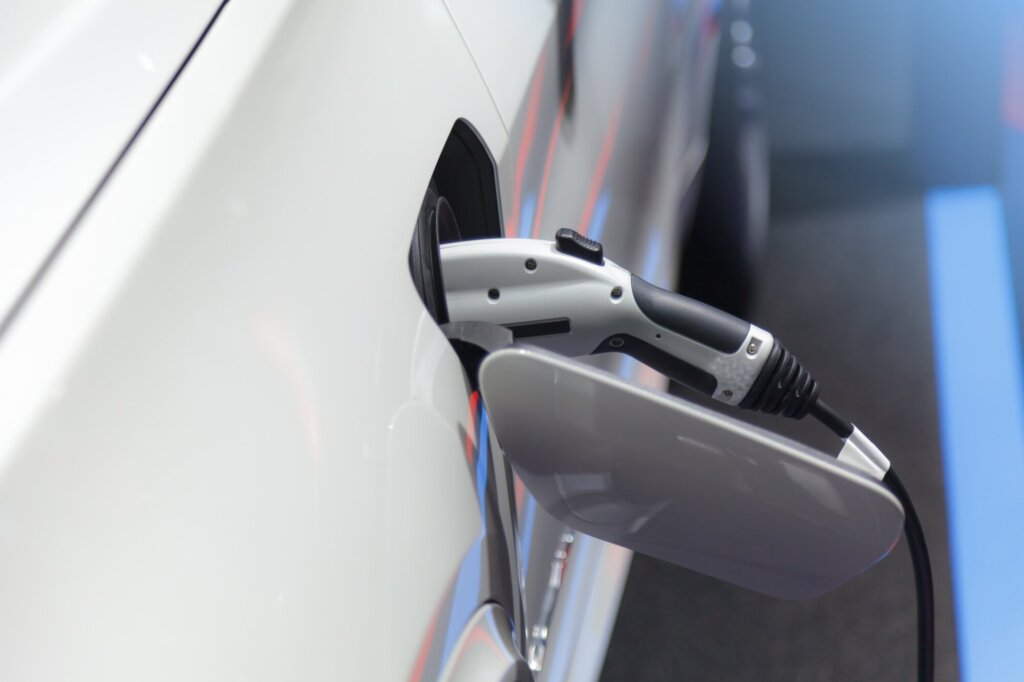
A new report from Dunsky prepared for CSA Group provides a comprehensive look at the Vehicle-Grid Integration (VGI) landscape in Canada and identifies key opportunities for standardization. Drawing on extensive literature review and stakeholder engagement with automakers, utilities, charging providers, and regulators across North America, our team assessed the technical readiness, benefits, and limitations of four key VGI applications: unidirectional smart charging (V1G), vehicle-to-load (V2L), vehicle-to-building/home (V2B/V2H), and vehicle-to-grid (V2G).
As electric vehicles (EVs) become a major source of demand on the grid, utilities face both challenges and opportunities. VGI can help transform EVs from new sources of load into flexible assets that provide grid services. While the potential is significant, several barriers must be addressed to enable widespread adoption.
Our research shows that the current standards landscape is diverse and evolving, but notable gaps exist. While alignment efforts are underway, gaps and overlaps in the standards landscape still create uncertainty. Utilities, vehicle manufacturers (OEMs), and aggregators face questions about which technologies, communications protocols, and standards to prioritize and how to ensure interoperability across EVs, chargers, aggregators, and the grid.
The report identifies five priority opportunities to advance standardization and enable reliable, interoperable, and scalable VGI deployment:
- Advance alignment of communications protocols
- Harmonize Canadian standards with international best practices
- Establish certification pathways for V2G-AC
- Verify that technology stacks can deliver VGI
- Develop best practices for utility interconnection
For utilities, the benefits of VGI are compelling. VGI can help shape load curves, integrate more renewable energy, and defer costly infrastructure upgrades, all while deepening customer relationships through resilience and new value streams.
VGI offers transformative potential for Canada’s electricity systems, but realizing this potential will require targeted standardization efforts to help ensure safety, interoperability, and grid compatibility. By advancing the standards landscape, Canada can better position itself to capture the economic, environmental, and resilience benefits of integrating EVs into its electricity systems.
Related Projects
- Read more about A Roadmap for Canada’s Grid Technology Supply Chains
A Roadmap for Canada’s Grid Technology Supply Chains
June 23, 2026
Canada’s electricity system is entering a period of growth and transformation. Meeting rising electricity demand, supporting industrial growth, and achieving…
- Read more about Pathways to Regional Electricity Integration in Atlantic Canada
Pathways to Regional Electricity Integration in Atlantic Canada
June 19, 2026
We are excited to share a new research report developed by Dunsky titled Pathways to Regional Electricity Integration for Atlantic…

- Read more about Dunsky in Nova Scotia
Dunsky in Nova Scotia
February 26, 2026
Nova Scotia has long been a Canadian leader in the energy transition. It was notably the first to create a…