

Beyond Demand Charge Relief: A Smarter Rate Design for Public EV Charging
Rate modernization efforts are among the top priorities for regulators and utilities across North America. Modernizing rates can serve multiple objectives, including improving traditional pricing practices, using dynamic rates to reduce peak loads, introducing new rates for emerging loads, or reducing the unintended consequences of past rate designs. Dunsky has advised clients on rate modernization questions by providing research, analytical support and expert advice on key design parameters to maximize the value of rate modernization efforts.
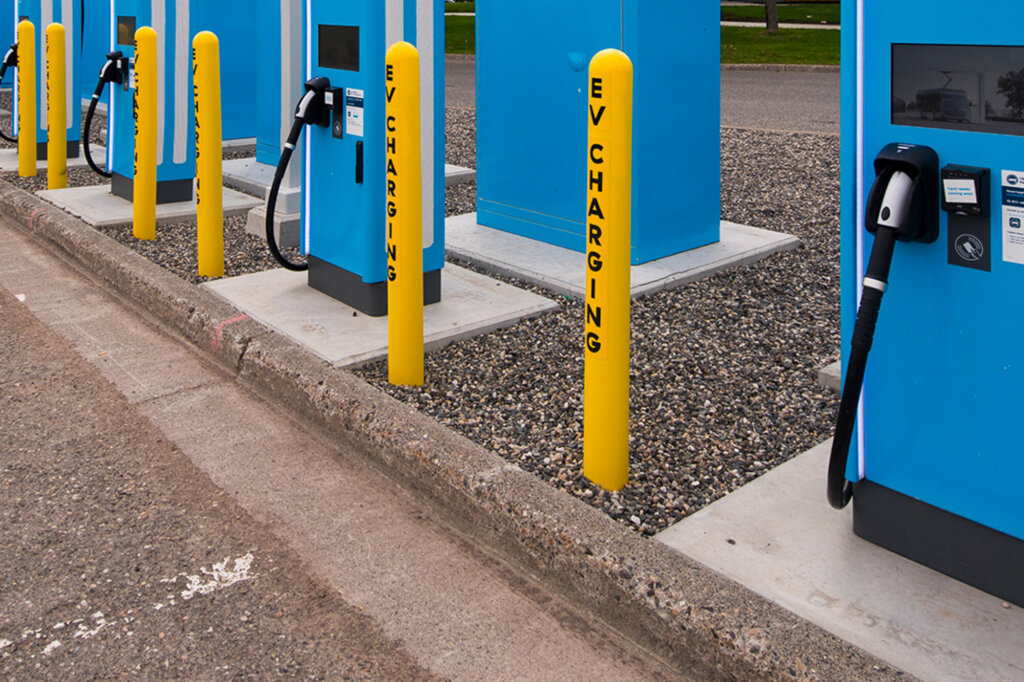
In the case of electric vehicles, rate design is critical. Having access to public fast charging is essential to adoption, particularly for drivers without reliable access to home charging and for longer-distance travel. Yet it faces a fundamental challenge: most EV charging happens at home, while public charging infrastructure must often be built years before utilization is high enough to support a strong business case., making appropriate rate design challenging.
As a result, utilities, regulators, governments, and charging providers across North America are increasingly asking whether electricity demand charges, charged by utilities to charging providers, are creating barriers to investment. In many jurisdictions, the debate has focused on whether demand charges should be reduced—or eliminated altogether—for public fast charging.
But that may be the wrong question.
Why Traditional Demand Charges Can Miss the Mark
Demand charges were designed for customers with relatively stable load profiles. Public fast charging is different. Charging stations can experience high but infrequent peaks in demand, particularly in markets where EV adoption is still emerging. A site may reach its maximum demand for only a short period during the month, yet still incur significant demand charges.
The challenge is especially acute for low-utilization sites, such as those in rural communities or along highway corridors where network coverage is important but usage remains relatively low. These locations may be critical to supporting EV adoption, but their economics can be difficult to justify.
Utilities often describe this characteristic through load factor, a metric that is closely related to charger utilization. Public fast charging stations typically have low load factors because they combine high peak demand with relatively modest overall energy consumption. In many cases, this means they look very different from traditional commercial customers, even when they are billed under the same rate structure.
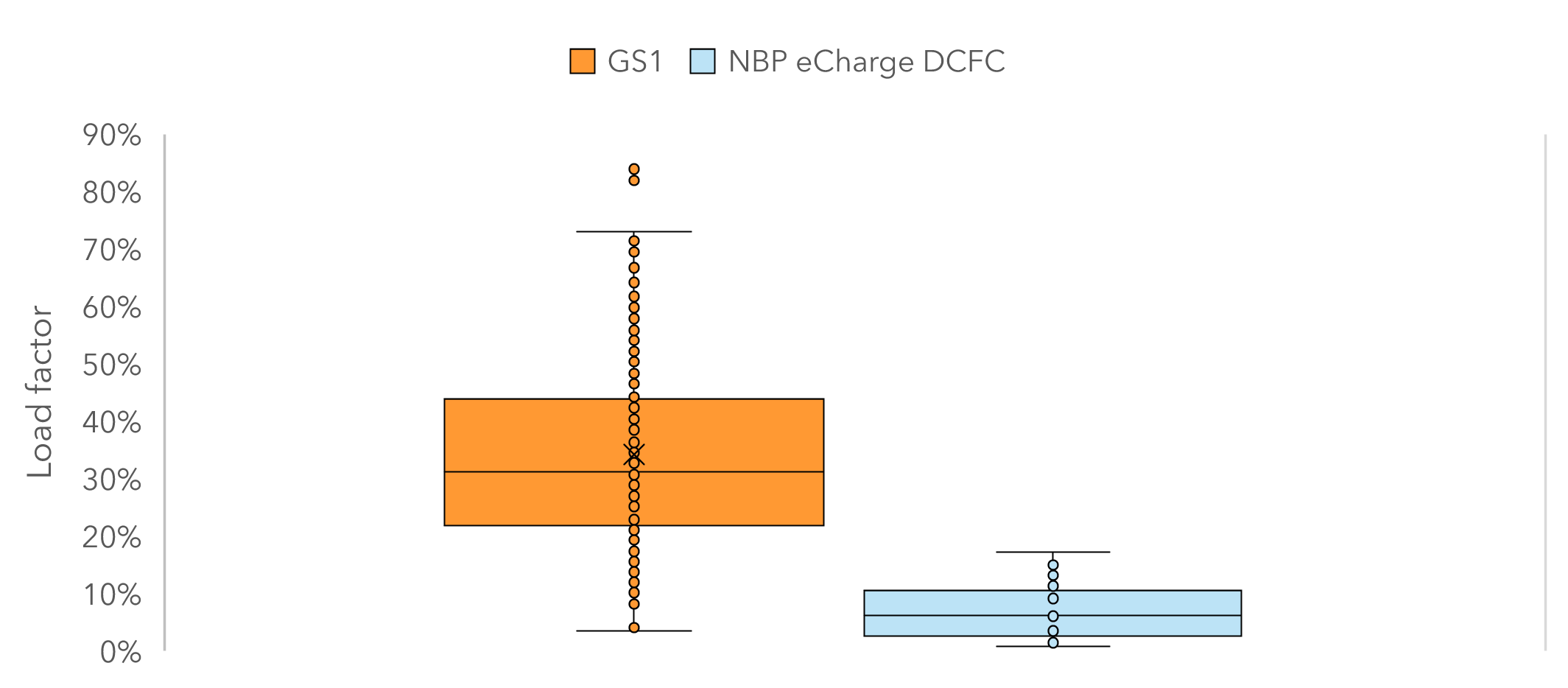
Public Fast Charging Has a Very Different Utilization Profile Than Typical Commercial Customers.
This figure from Dunsky’s “DCFC Electricity Rate Design Document”, submitted as evidence in support of NB Power’s General Rate Application, compares the load factors of a representative sample of commercial customers on the General Service rate to those of NB Power’s own DCFC sites on the eCharge network.
The question, then, is whether traditional demand charges accurately reflect the costs these customers impose on the system.
A More Durable Solution
That was the question Dunsky explored in work completed for NB Power. Rather than focusing solely on reducing electricity costs for charging providers, the objective was to develop a rate structure that better aligned charges with how public fast charging stations actually use the grid.
The resulting proposal takes a more nuanced approach than a demand charge holiday or blanket exemption. Instead of eliminating demand charges, the rate reduces them for low-utilization sites and shifts a greater share of cost recovery to energy charges. As utilization increases, demand charges gradually increase and the rate begins to resemble a more traditional commercial structure.
This approach recognizes that a charging station operating at very low utilization has fundamentally different economics—and often different impacts on the system—than a mature, highly utilized site.
Importantly, our proposed design for NB Power also preserves time-of-use energy pricing, maintaining a signal that electricity costs vary over time and encouraging charging providers to consider strategies that reduce costs during higher-cost periods.
Cost Causation Matters
The most important insight from the analysis was not that charging providers need relief. It was that public fast charging stations may not fit neatly within conventional commercial rate structures.
Dunsky’s analysis found that the existing rate was collecting more revenue from representative charging stations than was indicated by their estimated cost to serve. In other words, the issue was not simply affordability—it was cost causation. The way these customers were being charged did not fully reflect the way they used the system.
The proposed utilization-based rate was designed to address that mismatch. It improves the business case for public charging investment while remaining grounded in core rate-making principles, including fairness, cost recovery, and appropriate price signals.
A Lesson for Utilities and Regulators
The broader lesson is that supporting public charging does not require choosing between economic development and sound rate design. In some cases, the two objectives can be aligned.
As EV adoption grows, attention is increasingly shifting from charger deployment targets to the business models that will sustain charging networks over the long term. Utilities and regulators are beginning to recognize that rate design can play an important role in that transition.
NB Power’s proposed utilization-based charging rate was recently approved by the New Brunswick Energy and Utilities Board, demonstrating that regulators are willing to consider innovative approaches when they are supported by robust analysis and grounded in established rate-making principles.
Looking Beyond EV Charging
For Dunsky, this work reflects a broader focus on helping utilities, governments, and regulators design rates that better align with evolving technologies, customer needs, and system realities. Whether supporting electrification, DER integration, or other decarbonization efforts, effective rate design plays a critical role in ensuring a solid business case to scale the use of clean technologies. As electricity systems continue to evolve, questions around rate design, cost causation, and customer incentives will become increasingly important alongside more traditional planning and forecasting activities.
The full report is available here. It provides a detailed overview of the analysis underpinning the proposed rate, including stakeholder input from charging network operators, an assessment of cost causation and cost of service, a review of leading approaches across North America, and the development of the utilization-based rate design that ultimately received regulatory approval.

Jeff Turner
Director, Mobility
Jeff Turner is Dunsky’s Director of Mobility and co-lead of our Mobility practice. He is a trusted strategic advisor to decision-makers across North America who are responsible for enabling the transition to electric vehicles and other low carbon modes of transportation.
Related Insights
- Read more about Canada’s 2x Electrification Strategy: Four Takeaways from our Recent Webinar
Canada’s 2x Electrification Strategy: Four Takeaways from our Recent Webinar
June 23, 2026
Original Air Date: Thursday, June 4th, 2026 Webinar Recap Just over one month after the release of Canada’s 2x Electrification…
- Read more about Tools and Best Practices to Support Regulatory Innovation
Tools and Best Practices to Support Regulatory Innovation
February 17, 2026
To support the expansion of the electricity system, many regulators are being asked to enable new technologies, business models, and…

- Read more about Decarbonization Pathways for Equipment in Canada’s Construction and Agriculture Sectors
Decarbonization Pathways for Equipment in Canada’s Construction and Agriculture Sectors
January 19, 2026
Key Takeaways The Future is (Increasingly) Now Low-carbon technology advancements in the off-road transportation sector are accelerating. Once thought unachievable,…
